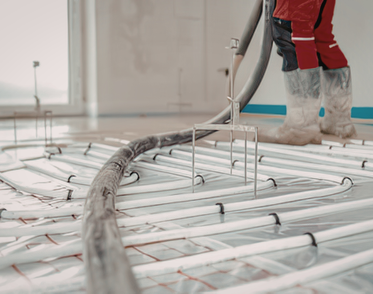

Warm water underfloor heating (UFH) is a flexible solution suitable for new builds, renovations and retrofit projects. In this short guide, we answer some of the most common questions around system design, installation and training, helping installers and specifiers understand how UFH can be successfully applied across different project types.
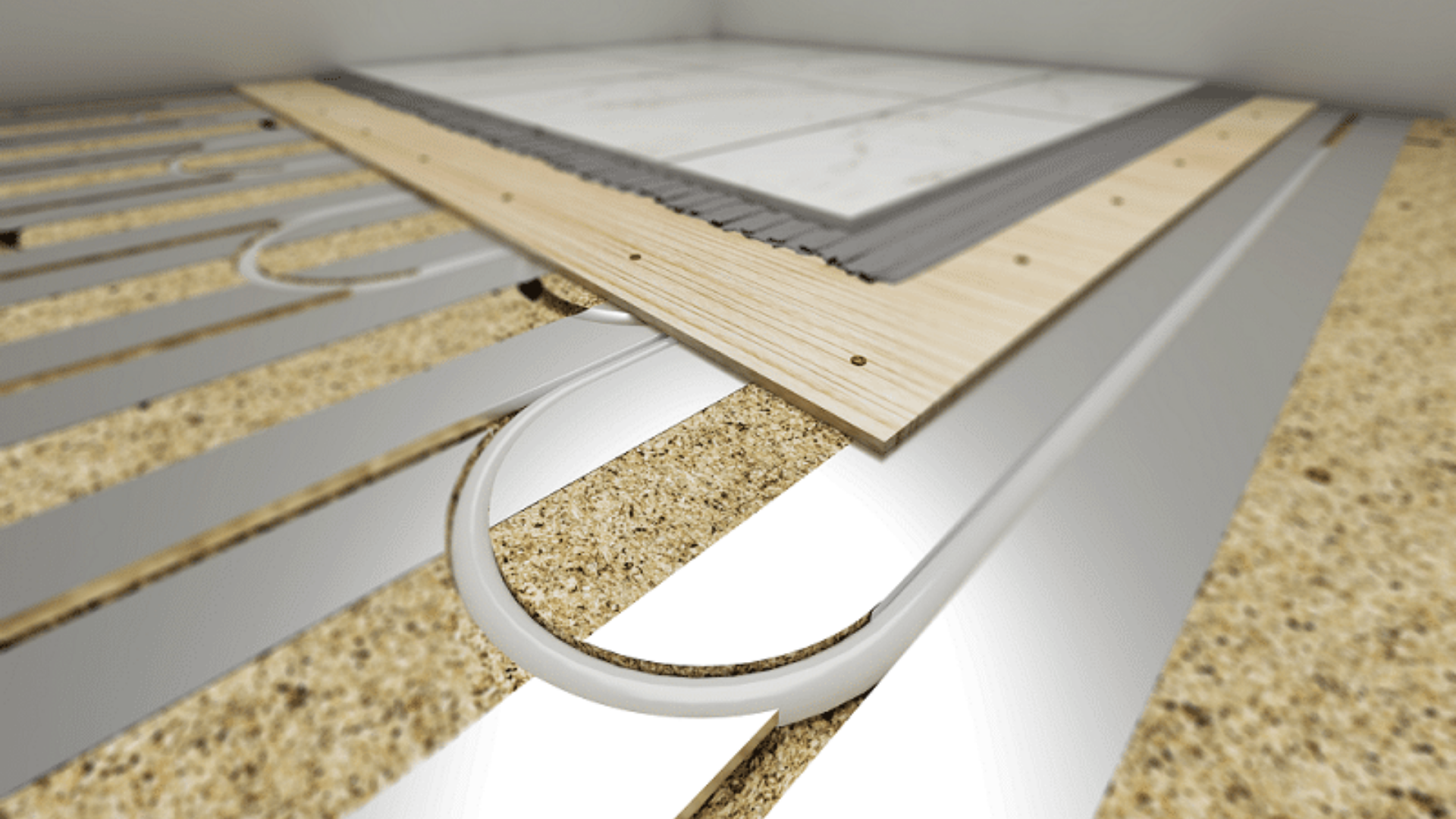
Is warm water UFH suitable for new builds and renovations?
Yes. Warm water underfloor heating (UFH) can be installed in a wide range of projects, including new builds, renovations, extensions and even single-room upgrades.
For retrofit projects, many modern systems are designed to be installed over existing floors, meaning there is often no need for excavation. This makes UFH a practical option for improving comfort and efficiency in existing homes as well as new developments.
Why is UFH system design important?
A professional UFH system design is strongly recommended for every project. It ensures the system is correctly specified to heat the property effectively and efficiently.
Design drawings also make installation easier by clearly showing where each component should be positioned, removing guesswork and helping to ensure a smooth, accurate installation process.
Is UFH easy to install?
Yes. UFH is generally straightforward to install, especially when working from a fully designed system.
Installers are supported with detailed drawings and clear installation guidance from suppliers, making the process simple and structured. Once familiar with the key components, installation becomes highly repeatable across projects.
Do I need training to install UFH?
No formal training is required to install UFH. However, many suppliers offer training courses that provide hands on experience and a deeper understanding of different system types.
These can be particularly useful for installers who are new to UFH and want greater confidence in system selection and installation methods.


Join the Underfloor Heating Group
Delivering efficient comfort through the floor. Join BEAMA Underfloor Heating to help shape the future of low temperature heating systems in UK homes and buildings. Influence standards, support best practice, and ensure underfloor heating is central to a Net Zero heating future.