The Electricity Networks Sector Growth Plan’s analysis revealed how while network investment delivers the biggest transformation of the UK’s grid in living memory, the upgrades are also generating tens of thousands of new jobs, including apprenticeships, engineering roles and senior posts right around the country, alongside £58bn in GVA (gross value added) for the UK economy.
In the first full report of its kind for electricity networks, the Plan, created jointly by Energy Networks Association (ENA) and BEAMA, includes detailed regional breakdowns. Network operators and their supply chain companies are set to invest up to £200bn over the next ten years, with spending directed to UK supply chain companies, regional projects and via local recruitment.
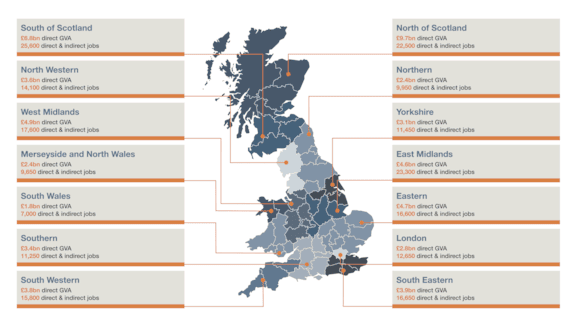
From almost £10bn GVA and 22,500 jobs in the north of Scotland to £4bn GVA and 16,000 jobs in the south-west of England, the Plan sets out how 72p of every £1 invested will directly benefit regions and local communities. In total, as many as 48,000 high quality, well-paid jobs are being created across the sector and its supply chain, in a wider total workforce of 210,000 by 2035.
More widely the Plan, produced with input from the UK Government, Scottish Government, Welsh Government, Ofgem, employers and trade unions, also sets out practical measures to strengthen Britain’s industrial capabilities by providing greater transparency around planned upgrades for manufacturers and SMEs.
These include enhanced supply chain visibility so manufacturers and SMEs can plan multi-year capacity, a shared Local Content methodology to enable quantification of UK economic benefits and a shift towards facilitating long-term procurement and collaboration. Combined, these measures will give businesses the confidence to invest, expand and create jobs across the country.
To support the implementation of the Plan, a newly established Growth Partnership, supported by ENA and BEAMA, has been established. Overseen by an independent Chair, the Partnership will include dedicated sub-groups driving the delivery of cross sector action plans, focused on supply chains and skills development, in order to make the Plan a reality.
Lawrence Slade, Chief Executive, ENA, said:
“Network Operators are working hard to deliver a once in a generation transformation of the grid to enable the connection of more clean, secure and affordable energy, powering new industries and unlocking new development across the UK.
“Our Sector Growth Plan describes how this transformation will bring direct, tangible benefits that will transform lives in communities around the country – including supporting 210,000 high-quality, well-paid jobs across network operation, manufacturing, engineering, construction and the wider supply chain.”
Yselkla Farmer, Chief Executive, BEAMA, added:
“Upgrading Britain’s grid is one of the biggest infrastructure programmes of our time. The Sector Growth Plan sets out how we will deliver it, giving manufacturers and service providers confidence to invest in people and places.
“The removal of uncertainties isn’t just helpful to the industry. It’s helpful for UK growth. After all, every new pylon and substation built over the next decade is a potential order for a factory, and jobs in local communities which will give us the electricity we need to power our industries and economy."
Cordi O’Hara, Co-Chair of the Electricity Networks Sector Growth Plan and President, National Grid UK, added:
“We’re upgrading the grid to strengthen energy security and connect homegrown energy to power homes and businesses, but it’s also a once in a generation opportunity to drive growth across the country, strengthening UK manufacturing and supply chains, attracting investment and creating good jobs.
“Capturing that opportunity will take all of us. Long-term visibility, early commitment and genuine partnership can give businesses the confidence to invest and grow. This plan is about coming together as an industry to make sure the investment in our networks delivers lasting economic value for every corner of Britain.”
Phil Dingle, Co-Chair of the Electricity Networks Sector Growth Plan and Director, Future Networks, Lucy Electric, added:
"The UK needs to be where manufacturers choose to build their next factory. Production worldwide is stretched to meet demand for grid equipment, and the technologies we have pioneered here give us a strong platform for growth. The UK supply chain is already creating jobs and investing in new manufacturing facilities.
"But companies need clear sight of future demand before they commit. The Sector Growth plan has identified actions, which will be delivered through the Growth Partnership, creating the foundations for investment in capacity and skills."
Akshay Kaul, Director General for Infrastructure at Ofgem said:
“Ofgem welcomes the Sector Growth Plan and the collaborative effort behind it. The focus now must be on turning that ambition into delivery.
“With government, industry and the regulator working together, there is a real opportunity to maximise the benefits of investment in Britain’s electricity networks. Ofgem will play its part in helping ensure that investment delivers lasting value for consumers while supporting jobs and economic growth across the country.”
Quotes from BEAMA members
Nicolas Pitrat, CEO of BRUSH Group:
"Long-term investment in the electricity network gives businesses like BRUSH the confidence to invest in our facilities, people and capabilities. Our partnership with the Distribution Network Operators has supported growth across our UK operations and enabled us to continue building the skills and expertise needed to deliver critical infrastructure projects for the UK Energy Networks as well as invest in new capacity, such as our brand new 132kV test cell in 2024 and new oven in 2026. Such investments and confidence have also allowed us to more than double our annual intake of apprentices across the Group. This demonstrates the tangible benefits of long-term infrastructure investment in creating skilled jobs, strengthening domestic manufacturing and developing the next generation of engineering talent. It is precisely the kind of collaboration that the Sector Growth Plan is designed to encourage.”
David Hall, Zone President UK & Ireland, Schneider Electric:
"The Electricity Networks Sector Growth Plan provides a strong framework for accelerating the investment and innovation needed to build a modern, resilient and future-ready electricity system.
"Schneider Electric is proud to have contributed to its development. As a company that continues to invest in UK manufacturing, including our facilities in Leeds and Scarborough, we welcome the Plan's recognition of the critical role that domestic supply chains will play in delivering UK energy security and affordability. Greater visibility of future network investment will give businesses the confidence to invest in capacity, skills and innovation, helping to create high-quality jobs and strengthen the UK's industrial base.
“We are particularly encouraged by the focus on accelerating the adoption of innovative technologies and digital solutions. Creating faster pathways for technologies such as SF₆-free switchgear will help modernise the grid, reduce emissions and ensure the UK remains an attractive destination for investment in clean energy infrastructure.
"Delivering a more competitive, secure and sustainable economy will require close collaboration across government, Ofgem, network operators and the supply chain. We look forward to continuing to work with partners across the sector to turn the ambitions of the Growth Plan into tangible outcomes for customers, communities and the wider economy."
Iholdi Luis Monasterio, General Manager, Ormazabal UK
“Delivering the scale of network investment required for the UK’s energy transition will depend on strong, long-term partnerships between network operators and the supply chain. The Electricity Networks Sector Growth Plan gives manufacturers greater visibility and confidence to invest in capacity, skills and innovation in the UK. At Ormazabal, we welcome this collaborative approach and the opportunity to play our part in building a resilient, sustainable electricity network for the future.”
Laura Fleming, Country Managing Director Hitachi Energy UK & IE
I am delighted to support the outcomes and recommendations from the growth plan. We have already felt the plan’s impact with the local content guidance given to Ofgem. This supports strengthening the UK supply chain and we have seen our customers preparing to support this. I look forward to seeing further benefit as the report’s other recommendations are implemented.
Dai Richards, Director of External Affairs Hitachi Energy UK & IE
The level of collaboration across all organisations in developing the growth plan is something I haven’t seen in my many years in the sector and provides an excellent platform to deliver all of the plan’s recommendations. Providing visibility of long term future demand across the sector has always been a critical output from the growth plan and that improved pipeline visibility is already proving useful in our investment plans.
Steve Goldspink, Managing Director of Electrification and Automation at Siemens UK & Ireland
"This is a major milestone for the future of the energy sector. The electricity grid is one of the UK's most critical national assets. It underpins businesses and communities across the country, and its capacity and resilience will increasingly determine our ability to attract investment and grow industries, from advanced manufacturing to the digital infrastructure needed for AI.
"This plan gives us a roadmap to maximise the value we already have in our grid infrastructure - through targeted technology adoption and by extending the life of existing equipment wherever possible. The technology we need already exists, the challenge is deploying and adopting it at the pace required. The report outlines a need to ensure we have enough skilled people to support the transition, particularly in critical areas such as commissioning, where shortages can ultimately determine how quickly new infrastructure comes online.
"We also welcome the focus on moving away from SF6. Siemens F-gas free switchgear is available today and is already being deployed by many of our customers who have shown an eagerness to get ahead. We would encourage the UK to move decisively and accelerate the transition, so that F-gas free switchgear becomes the standard for new grid investment."
Darren Davidson, Vice President UK&I, Siemens Energy
“Siemens Energy UK strongly welcomes the Electricity Networks Sector Growth Plan. As a leading provider of the technologies that underpin the UK's electricity networks, we see first-hand the scale of the challenge ahead and the opportunity for UK jobs and investment.
"Delivering the grid infrastructure needed for a secure, affordable, and decarbonised energy system will require a level of delivery not seen for generations. No single organisation can achieve this alone. Success will depend on unprecedented collaboration between government, network operators, and supply chains.
"The Growth Plan provides a vital framework for aligning ambition with action, strengthening UK skills and industrial capability, and accelerating the delivery of the resilient electricity system that will power economic growth and the energy transition.”
Clar Collins, Managing Director, GE Vernova
“The Electricity Network Sector Growth Plan is an important step for UK industrial policy. The ambition to channel £200 billion of electricity network investment over the next decade, with 72 pence in every pound staying in the UK supply chain, sets a clear direction for the future of UK energy.
“At GE Vernova, we’re proud about being part of that story. From our investments in our Stafford manufacturing facilities to delivering the country's first high-capacity east coast subsea transmission link, we are demonstrating what long-term partnership with UK industry looks like in practice.
“We’re also looking forward to working with government and partners to develop the skills to support the 128,000 high-quality UK jobs needed across the sector. You cannot build a world-class electricity network without a world-class workforce to deliver it.”